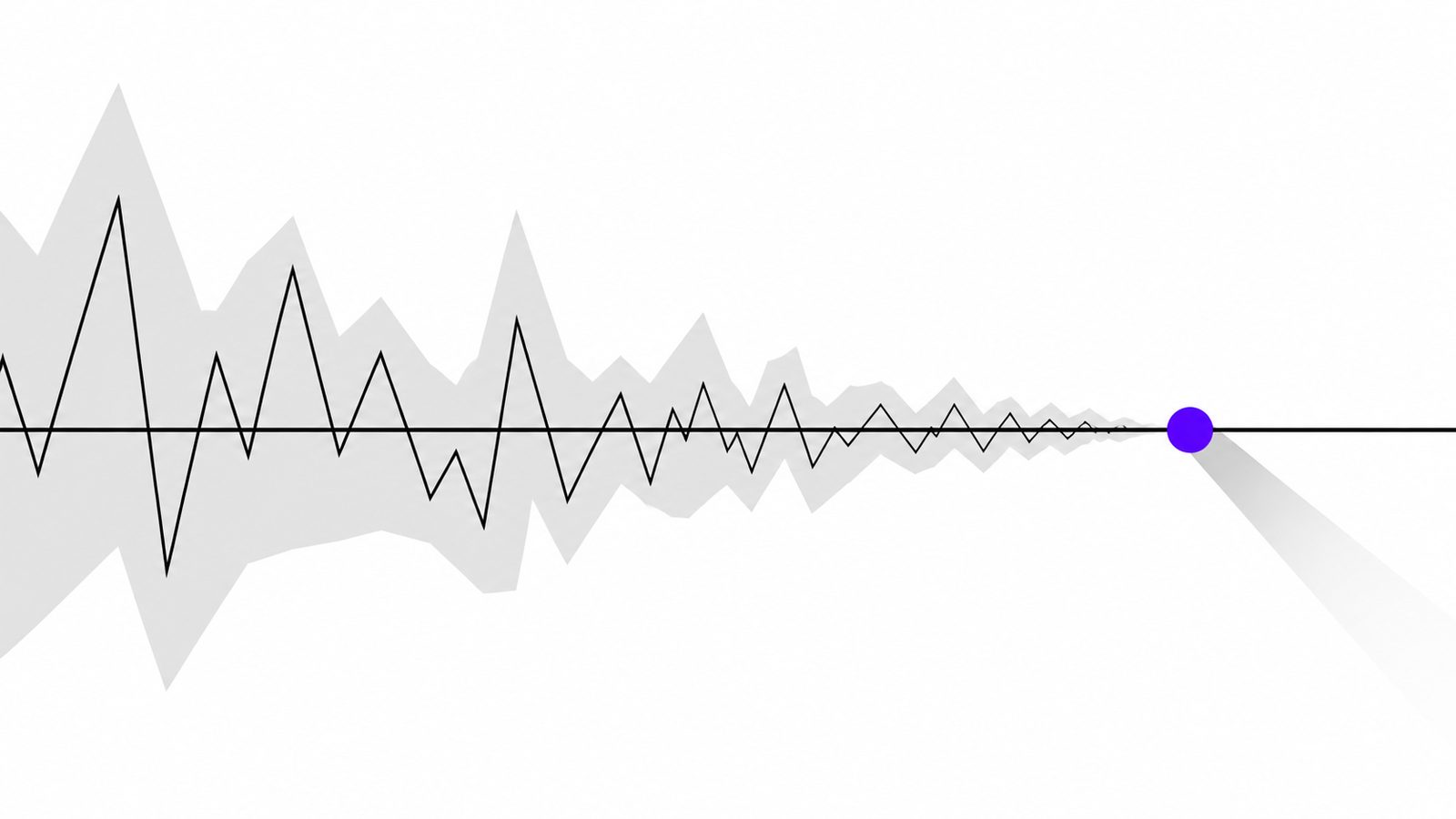
RTP, return to player, and volatility are the two numbers that tell you the most about any slot before you press spin. They are constantly confused, and confusing them is one of the most expensive mistakes a player can make. RTP describes the long-run edge the game holds over you. Volatility describes how violently your balance will swing on the way to that long run. They are independent of one another, and you need to read both.
This guide explains exactly what each number means, why your short session can look nothing like the headline figure, how the two interact, and how a sensible player should actually use them. It also covers the table games and live game shows where the same maths applies under different names, and it explains why the most seductive myths in gambling, the idea that a machine is due or that it runs hot and cold, are simply false.
What RTP actually measures
RTP is the percentage of everything wagered on a game that it is designed to pay back to players across an effectively infinite number of rounds. A slot with a 96 percent RTP is built so that, over billions of spins pooled across every player who ever touches it, it returns 96 pence for every pound staked.
The crucial words are designed and across billions of spins. RTP is a property of the game maths, verified by independent test houses before a title is certified for a regulated market. It is not a forecast of your afternoon. It is closer to a manufacturing specification: it tells you what the machine converges towards when you run it forever, not what it will do in the next hundred rounds.
RTP is expressed as a single percentage, and higher is better for the player. A 97 percent game keeps less of your money over time than a 94 percent game. That is the entire headline. Everything else in this guide is about the gap between that clean long-run number and the messy short-run reality you actually experience.
The house edge is simply RTP turned around
The house edge is the mirror image of RTP. If a game returns 96 percent to players over the long run, it keeps 4 percent for the operator. That retained slice, 100 percent minus the RTP, is the house edge.

So a 96 percent RTP is a 4 percent house edge. A 94 percent RTP is a 6 percent house edge. A 97.5 percent RTP is a 2.5 percent house edge. The two are locked together and always sum to 100 percent, which means you only ever need to know one of them.
The house edge matters because it is the number you multiply by your total turnover to estimate what the game will cost you. It is not applied once to your deposit. It is applied to every pound you wager, including pounds you win and then stake again. This is why total turnover, not your starting balance, is the figure that drives your expected loss, a point we return to with worked examples later.
The difference between two RTP figures looks trivial and is not. Consider two slots, one at 94 percent and one at 96.5 percent. The gap is 2.5 percentage points. If you wager 5,000 pounds over a month across many spins, the expected loss on the 94 percent game is 5,000 times 0.06, which is 300 pounds. On the 96.5 percent game it is 5,000 times 0.035, which is 175 pounds. The higher RTP game hands you back 125 pounds you would otherwise have lost, for the identical play. That is why we take RTP seriously.
Theoretical RTP versus what you actually see
There are two RTP figures worth separating in your head. The theoretical RTP is the certified design figure, the 96 percent baked into the maths. The actual RTP is what a real sample of spins produced, and it is almost never equal to the theoretical figure until the sample becomes enormous.
Casinos and providers sometimes publish rolling actual RTP figures, the observed return over the last month or the last several million spins. Over a large enough sample the actual figure hugs the theoretical one closely, usually within a fraction of a percentage point. Over a small sample it is all over the place. A slot can post an observed 130 percent RTP over a thousand spins because one player triggered a big feature, or an observed 40 percent over the same window because nobody did. Neither figure tells you anything about the design. They are just noise around the true value.
This is the single most important idea for a player to internalise. The theoretical RTP is real and reliable, but it only reveals itself over volume you will personally never come close to producing. Your own play is a tiny sample, and tiny samples are dominated by luck and volatility, not by the edge.
The law of large numbers and why short sessions diverge
The reason theoretical and actual RTP eventually agree is the law of large numbers. It states that as the number of independent trials grows, the average outcome converges towards the expected value. Flip a fair coin ten times and you might see seven heads. Flip it ten million times and the proportion of heads will sit almost exactly on 50 percent. The coin did not change. The sample got big enough for the randomness to average out.
Slots obey the same law. Each spin is an independent draw from a fixed probability distribution set by the game maths. Over a few hundred spins that distribution barely gets sampled, so your actual return can land anywhere from near zero to several hundred percent. Over hundreds of millions of spins it is pinned to the theoretical RTP.
Why the edge is invisible in the short run
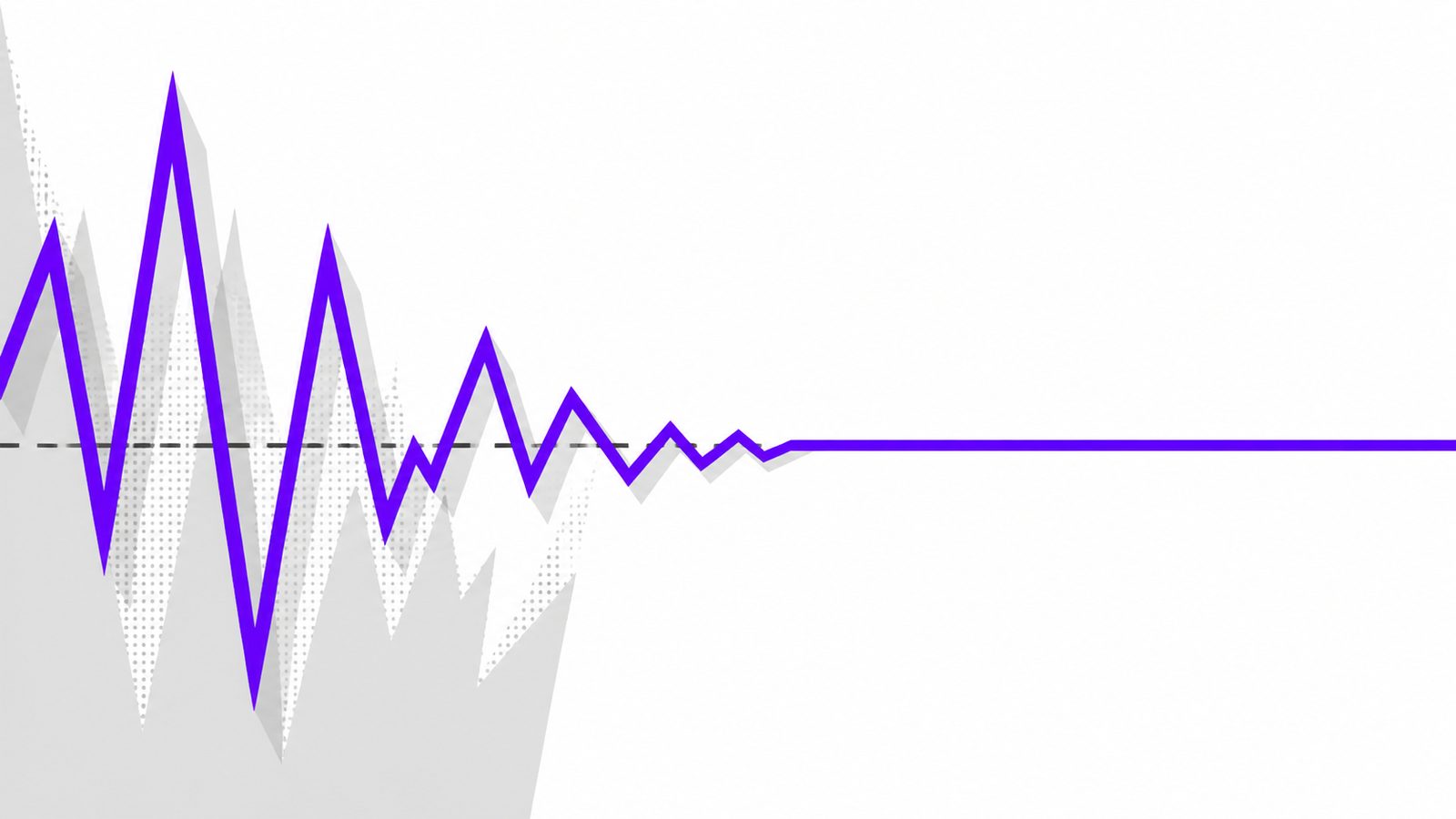
A concrete way to feel this: at 96 percent RTP the house edge is 4 percent, so on a one pound spin the average cost is 4 pence. But a single spin does not cost you 4 pence. It either loses you your pound, returns a small win, or occasionally returns a large multiple. The 4 pence is an average that only emerges after you have made a great many spins. In a short session the 4 pence per spin is completely buried under swings that are many times larger. That is why a session on a 96 percent slot can end up hundreds of pounds down or hundreds of pounds up, and both outcomes are entirely normal.
The edge always wins in the end
The uncomfortable corollary is that the same law that hides the edge in the short run guarantees it in the long run. The more you play, the more certainly your actual return grinds down towards the theoretical RTP, which is below 100 percent. Variance is the only thing that ever puts a player ahead, and variance is symmetrical: it can just as easily put you far behind. The edge is not symmetrical. It only ever points one way.
Volatility and variance explained
Volatility, often used interchangeably with variance, describes how the wins are distributed rather than how much comes back on average. Two slots can share an identical 96 percent RTP and feel like completely different games because their volatility differs.
A low-volatility slot pays small wins frequently. Your balance drifts down gently with regular little top-ups, and big wins are rare and modest. A high-volatility slot does the opposite: long stretches of nothing, punctuated by occasional wins that can be hundreds or thousands of times your stake. Medium volatility sits between the two. The long-run RTP can be identical across all three; the journey is not.
Hit frequency is not the same as RTP
Hit frequency is the proportion of spins that return anything at all, even less than your stake. A slot might have a hit frequency of 25 percent, meaning one spin in four pays something. Hit frequency correlates loosely with volatility, low-volatility games tend to hit more often, but it is a distinct number. A game can hit frequently with tiny wins and still be high volatility overall if its rare top wins carry most of the return. Do not read a high hit frequency as a sign of a generous game; it often just means the payouts are small.
How volatility is classified
Most providers label their games on the info screen as low, medium, medium to high, or high volatility. A minority publish an actual variance figure or a distribution chart, but the plain label is usually all you get. Treat it as a genuine signal about the shape of the ride and about how much bankroll you will need to survive the dry runs.
Why RTP and volatility are independent
This is the point players most often miss. RTP and volatility are separate dials. Knowing one tells you nothing about the other.
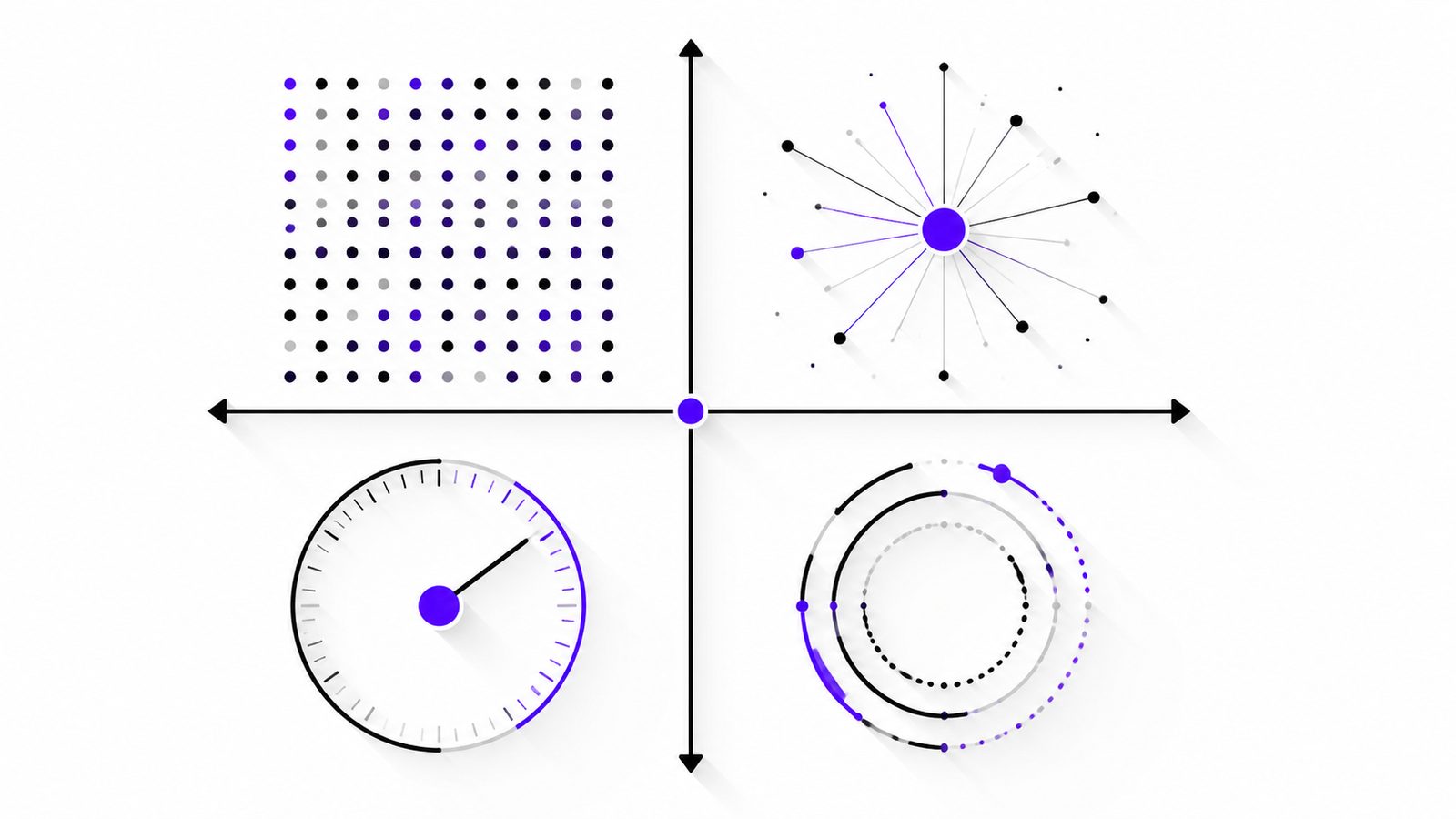
You can have a high-RTP game that is brutally volatile, a game that returns 97 percent over the long run but does so by starving you for a thousand spins and then paying one colossal win. You can equally have a low-RTP game that is gentle and low volatility, dribbling back frequent small wins while quietly keeping 6 percent of everything. There is a loose tendency for very high RTP figures to appear on higher-volatility games, because a generous long-run return is cheaper to fund through rare large payouts than through frequent small ones, but it is a tendency, not a rule, and plenty of games break it.
The practical lesson: read both numbers, every time. RTP tells you what the game costs over the long run. Volatility tells you whether your bankroll can survive long enough to experience that long run, or whether you will bust out during a dry stretch first. A player who checks only one is flying half blind.
How bonus buys change the maths
Many modern slots offer a bonus buy, sometimes called a feature buy, which lets you pay an up-front multiple of your stake, often 50 to 100 times, to jump straight into the free-spins round rather than waiting for it to trigger naturally.
Bonus buys usually carry their own RTP figure, and it is frequently a percentage point or two different from the base game RTP, sometimes higher, sometimes lower. More importantly, a bonus buy dramatically concentrates your turnover and your variance. When you pay 100 times your stake for one feature, you are wagering a large sum on a single high-variance event. The house edge is applied to that whole buy amount, so a 4 percent edge on a 100 pound buy is an average cost of 4 pounds for that single feature, and the outcome swings enormously around it.
The upshot is that bonus buys burn through a bankroll far faster than base-game play at the same nominal stake, because your effective turnover per press is huge. They can be entertaining, but they are not a shortcut to better odds. The edge is the same or worse, and you are paying it on much larger turnover in a much shorter time. Anyone tempted by feature buys should also read our guide on reading bonus terms, because promotional restrictions frequently exclude or limit them.
Configurable RTP and reading the info screen
Here is the detail that catches out even experienced players. A single slot title often does not have one RTP. Providers commonly ship a game in several certified RTP configurations, for example 96 percent, 94 percent and 92 percent, and the operator chooses which build to deploy.
This is why the identical game can pay 96.5 percent at one casino and 94 percent at another. Well-run, strongly regulated brands generally deploy the highest available configuration. Some operators quietly deploy a lower one to protect their margin. Nothing on the game tile or the lobby thumbnail tells you which version you are about to play.
The way to check is always the same. Open the game, then open its information or paytable screen, usually reached through a menu, a question mark, or an i icon. The deployed RTP is disclosed there, along with the volatility label and the paytable. Compare the figure shown against the provider's reference RTP for that title. If the info screen shows 94 percent and the provider's own reference is 96.5 percent, you now know the operator has chosen the stingier build, and you can decide whether to play elsewhere. That gap is the operator quietly taking more from you before a single reel has spun. Our top-rated casinos are the brands that consistently deploy the higher configurations.
RTP in table games
The RTP idea applies to every game in the casino, though table games usually quote the house edge directly rather than an RTP percentage. The same relationship holds: house edge is 100 percent minus RTP.
Blackjack and basic strategy
Blackjack has one of the lowest house edges in the building, but only if you play it correctly. Played with correct basic strategy, the mathematically optimal decision for every combination of your hand and the dealer's up card, the house edge on a typical game can be around half a percent, an RTP near 99.5 percent. Played on hunches, the edge balloons, because every deviation from basic strategy hands value back to the house. The rules also matter: the number of decks, whether the dealer stands or hits on a soft 17, and the blackjack payout, 3 to 2 is fair and 6 to 5 is a serious tax on the player, all move the edge. Blackjack rewards a player who studies; few casino games have such a large gap between good and bad play.
Roulette and the zeroes
Roulette is fixed by its wheel. On a single zero European wheel the house edge is 2.7 percent, an RTP of 97.3 percent, because there is one green pocket among 37 that pays nothing to the outside bets. On a double zero American wheel there are two green pockets among 38, and the house edge nearly doubles to 5.26 percent, an RTP of about 94.74 percent. The bets, the payouts and the excitement are otherwise identical, so the single zero wheel is strictly the better choice whenever you have it. There is no strategy that changes these numbers; the wheel does not care what you have bet, and every pocket is equally likely on every spin.
Baccarat and the three bets
Baccarat offers three main wagers with three different edges. The banker bet carries a house edge of about 1.06 percent even after the standard commission on winnings, making it one of the best bets in the casino. The player bet is a touch worse at about 1.24 percent. The tie bet looks tempting because of its large headline payout, but its house edge is punishing, commonly around 14 percent depending on the payout offered. The maths is unambiguous: bet the banker, occasionally the player, and leave the tie alone.
Live game shows and their RTP
The live game show format, big money wheels, multiplier games and dice or ball based rounds hosted by a live presenter, has become one of the most popular categories in online casinos. These games publish an RTP just as slots do, and it is usually disclosed in the game rules.
Two things are worth knowing. First, the RTP on these games often varies depending on which bets you place within the game, because different segments or bet types carry different edges, so a single headline RTP can hide a range. Second, these games are typically high volatility by design, built around large multipliers that land rarely. The presenter and the studio atmosphere make them feel gentler than a slot, but the underlying maths is not gentle, and many of these titles carry a house edge noticeably larger than a good slot. Read the rules screen, note the RTP for the specific bets you intend to place, and treat the entertainment value as the main reason to play rather than the odds.
Why due, hot and cold are myths
The most persistent and expensive beliefs in gambling are that a game is due to pay after a cold run, or that it is running hot and will keep paying. Both are false, and understanding why protects your bankroll.
Every spin on a licensed slot, and every round on a certified table or live game, is independent. The random number generator draws a fresh result each time with no memory of what came before. A slot that has paid nothing for two hundred spins has exactly the same probability of paying on the next spin as one that just delivered a jackpot. The machine cannot be due, because it does not know or care what it has done.
The belief that past results change future probabilities is the gambler's fallacy. It feels intuitive because we expect randomness to self-correct, but independent events do not self-correct within any timeframe you will experience. The law of large numbers works by drowning early results in a vastly larger sea of later ones, not by staging a comeback to balance a bad run. Chasing a due machine, or piling into a hot one, simply increases your turnover, and more turnover means more of the house edge applied to your money. The myths do not just fail to help; they actively cost you.
Variance, bankroll and worked examples
The practical question is how to combine the edge and the volatility into a sensible bankroll decision. Start with expected loss, which is the clean, predictable part.
Expected loss equals your stake per spin, times the number of spins, times the house edge. Take a 96 percent slot, so a 4 percent edge, played at one pound a spin for 2,000 spins. The expected loss is 2,000 times 1 times 0.04, which is 80 pounds. Over a long enough run that is roughly what the game will cost you.
But 80 pounds is only the centre of the distribution, not the range you will actually experience. On a high-volatility slot the swing around that 80 pounds is enormous. The per-spin standard deviation on a volatile slot can be ten to twenty times the stake or more, which means that over 2,000 one pound spins your result can plausibly land many hundreds of pounds either side of the 80 pound expected loss. You might finish 400 pounds down having never hit a feature, or 300 pounds up having caught a big one. The expected loss is real, but volatility dwarfs it over any single session. On a low-volatility slot with the identical 80 pound expected loss, the spread is far tighter, and you are much more likely to finish within a modest distance of that figure.
This is why bankroll and volatility have to be matched. A rough rule of thumb: your bankroll should cover a comfortable number of spins at your chosen stake, so that a normal dry run does not wipe you out before variance has a chance to work in your favour. If your bankroll covers fewer than a couple of hundred spins at your stake, a high-volatility slot is a poor fit, you are statistically likely to bust during one of its long empty stretches without ever seeing the win that justifies the game. Drop to a lower stake, choose a lower-volatility title, or both. If your bankroll comfortably covers many hundreds of spins, high volatility becomes viable and, for many players, more entertaining, because the big wins land often enough within the session to matter.
A second worked example ties it together. Suppose you have 100 pounds and want a couple of hours of play. At 20 pence a spin on a low-volatility 96.5 percent slot, your expected loss over, say, 1,000 spins is 1,000 times 0.20 times 0.035, which is 7 pounds, and the tight variance means your 100 pounds will very likely last the session. Take the same 100 pounds to a high-volatility slot at 2 pounds a spin, and you are wagering ten times as much per press. Your expected loss over the same 1,000 spins would be 1,000 times 2 times 0.035, which is 70 pounds, and the wild variance means you could easily be broke inside twenty minutes or, less often, well ahead. Same starting money, same RTP, completely different experience, dictated by stake and volatility rather than by the edge.
How we weight RTP transparency in our scoring
We do not score individual slots, and we are sceptical of anyone who claims to. Our review model scores the operator, not the catalogue title by title, because the operator is what you are actually choosing when you sign up.
RTP transparency is a real factor in that scoring. We reward operators who deploy the higher available RTP configurations and who make the deployed RTP easy to find, and we mark down those who ship stingy builds or bury the number. Because deployed RTP is decided partly by the game providers an operator carries, we weight the presence of established quality studios in our game-range assessment, since those studios are the ones most likely to ship at the intended RTP rather than a cut-down build. Alongside that we look at licensing, since strongly regulated brands are far more likely to deploy honest configurations and to disclose them plainly.
If you want to see how this plays out in practice, browse all reviews or go straight to our top-rated casinos. If you are playing from a specific market, our country pages such as the guide to Australian sites apply the same scoring lens to the brands available there.
The single habit that will save you the most money is the simplest one in this guide. Before you play any slot, open its info screen and read the deployed RTP and the volatility label with your own eyes. The reference RTP is what the game maker intended. The deployed figure is what this operator has actually chosen to give you. The gap between the two, and whether your bankroll can survive the volatility, is the whole game.