
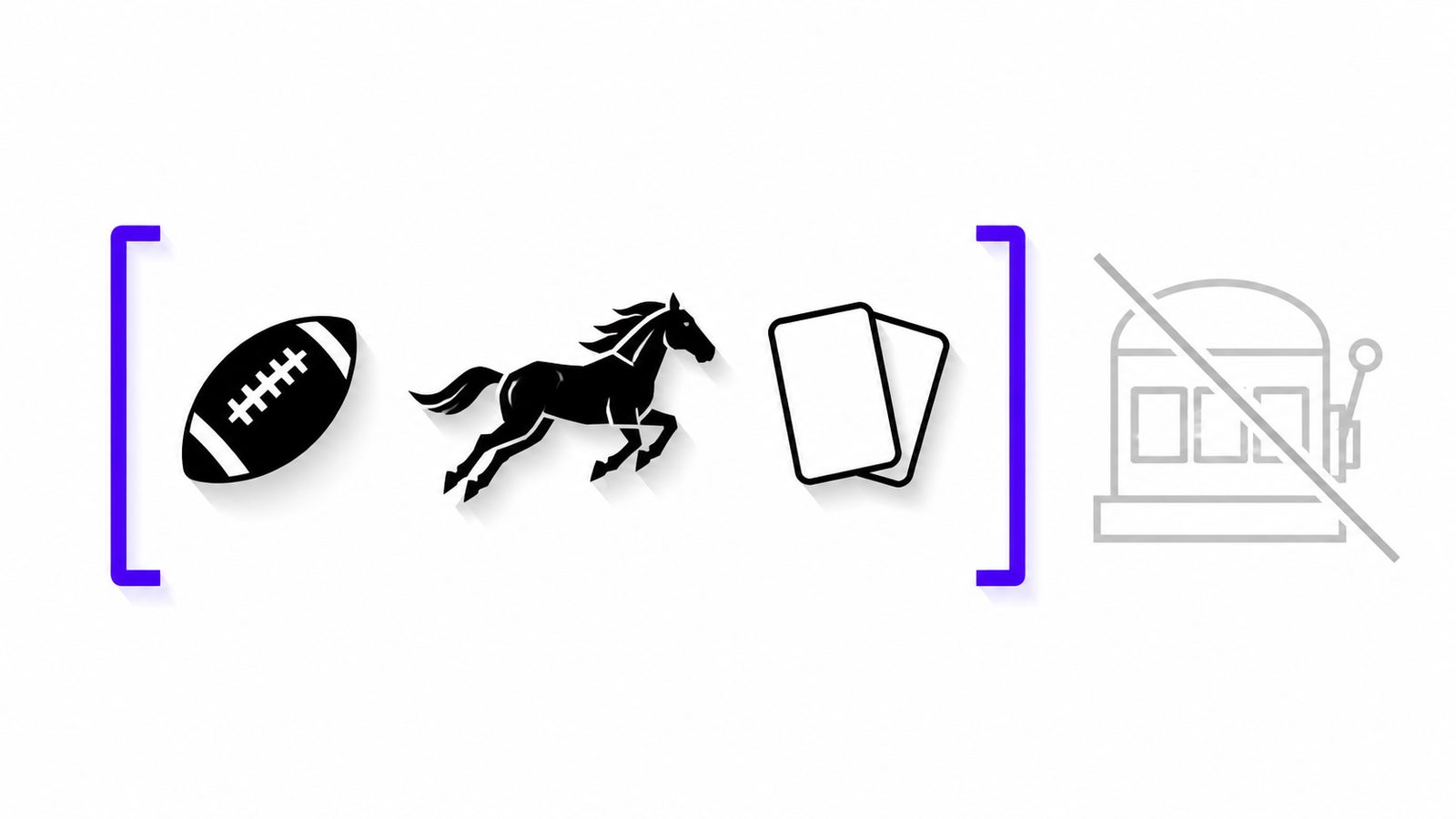
France occupies an unusual position among European gambling regimes. Online casino games, including slots and online roulette, remain prohibited under French law. What the national regulator oversees online is a narrower field: sports betting, horse race betting known locally as paris hippiques, and poker. Anyone researching the French market needs to begin from that single fact, because it shapes every promotional rule that follows.

Who the ANJ is and what it replaced
The Autorite Nationale des Jeux, or ANJ, is France's national gambling regulator. It was established in 2020 and took over the role previously held by ARJEL, the earlier online gaming authority. Its remit is broader than the old body's, covering not just online betting and poker but also the land-based lottery and betting network operated under monopoly by the national lottery company, along with a general mandate over advertising and the prevention of excessive gambling.
The founding rules were set out in a package of texts around the reform, including the widely cited Decret n 2020-1349 of 4 November 2020, which laid down the modalities of ANJ regulation. That decree is the backbone of the modern system. It is worth stressing that it is a general regulatory framework rather than a single dedicated bonus law, because online commentary sometimes describes it as though it were purely a promotions statute.
What the ANJ actually regulates online
The scope of legal online gambling in France is deliberately narrow. Three product categories are authorised for private operators: sports betting, horse race betting, and poker. Online casino games sit outside that list and are not licensed. This is the single most important point for any reader arriving from the British or Maltese perspective, where online slots are a mass-market product.
That prohibition has consequences that ripple through every promotional question. Because there is no licensed online slots or online table-game sector, there is no such thing as an ANJ-approved online casino bonus, no compliant free-spins package and no regulated slots cashback. When a site markets those things to French players, it is operating outside the licensed perimeter. This is the backdrop against which every bonus discussion in France has to be read.
The legal welcome offer format
For the products that are licensed, France historically permitted a very specific and narrow style of welcome incentive rather than the open-ended matched-deposit deals common elsewhere. The compliant format has centred on a first-bet refund paid in real cash if the opening wager loses, capped at an amount the operator sets in its own terms.
The distinction between real cash and bet credits matters enormously here. A refund paid as withdrawable cash is treated very differently from a token or credit that can only be used for further wagering. Operators are expected to be explicit about which one they are offering, so that a player is never left assuming a reward is cash when it is in fact a restricted credit. The practical effect is that French welcome offers tend to be smaller and simpler than their British equivalents, with far less of the layered wagering machinery that turns a headline figure into something a player then struggles to convert into withdrawable money. If you are new to that language, our guide to reading bonus terms walks through the difference between cash, credits and wagering conditions in plain English.
The 2022 bonus guidelines that still set the tone
The clearest single statement of the ANJ's thinking on promotions came in October 2022, when the regulator published guidelines on the promotion of gambling offers. That package combined binding requirements with non-binding recommendations, and it continues to shape practice today.
On the binding side, the ANJ prohibited operators from offering a financial reward to people identified as potentially having an excessive or pathological relationship with gambling, and required particular vigilance towards anyone who had recently taken up a self-exclusion measure. On the recommendation side, the regulator advised that welcome offers should not exceed 100 euros in total value, whether provided as a single offer or bundled into a package.
The guidelines also set clear transparency duties. Operators must state how long an offer runs, whether it is free or conditional on a deposit or wager, whether any reward is withdrawable cash or a game credit, and what conditions apply to receiving it. In short, the rules on a French promotion are meant to be legible and understandable to an ordinary reader before they opt in, not buried in dense terms.
Advertising, sponsorship and continued tightening
Promotional restriction in France does not stop at the shape of a bonus. The ANJ has taken an increasingly firm line on advertising volume and on sponsorship arrangements, both of which are treated as part of the same protective mission.
The regulator has moved to limit the number of sponsorship deals an operator may run in a year, and it has repeatedly signalled discomfort with the sheer weight of betting advertising around major sporting events. Ahead of the 2026 football World Cup, the ANJ set expectations around advertising spend, part of a broader pattern of tightening rather than loosening. The direction of travel has been consistent: fewer aggressive inducements, clearer messaging, and stronger safeguards during the high-risk periods when betting advertising peaks.
For operators, that means promotional strategy in France is reviewed and constrained in ways that would feel unfamiliar in less regulated jurisdictions. Sponsored content by streamers and other creators is not a loophole; the ANJ's general approach treats a promotion as a promotion regardless of who delivers it, so a sponsored code or offer is expected to meet the same standards as any other advertisement from the operator.
Player protection sits at the centre
The through-line in all of this is player protection. The ANJ frames its mandate around reducing excessive gambling and shielding minors and at-risk players, and every promotional rule connects back to that goal. Mandatory warning messaging and the details of the national problem-gambling helpline accompany compliant advertising, and the ban on incentivising identified at-risk players is a binding obligation rather than a suggestion.
This is why the French model looks so different from markets built around competitive bonusing. The starting assumption is that promotions carry risk, and the regulatory job is to keep that risk small, visible and controllable rather than to let operators compete on the size of their offers.
What this means for offshore sites
A large grey market of offshore sites markets casino-style play and generous bonuses to French residents. These operators are not licensed by the ANJ and do not sit under its promotional rules. Their advertised bonuses are not ANJ-approved and should not be read as carrying any French regulatory protection.
The ANJ's principal enforcement tool against these sites is domain blocking, a power the French system has used to restrict access to unlicensed operators. That power is real but limited, which is why offshore casino advertising continues to reach French audiences despite the domestic prohibition on online casino play. On our own France pages we treat any such listing as informational only, with no ANJ licence, and we would encourage readers to do the same. If you want to compare our fully reviewed operators instead, our all reviews hub is the place to start.
How to read a French bonus offer
For a reader in France, a few practical habits follow from all of the above. First, confirm the product: if a site is offering online slots or live casino, it is by definition outside the licensed French perimeter, whatever its bonus looks like. Second, check whether any reward is real cash or a restricted credit, because the two behave very differently at withdrawal. Third, look for the mandatory warning messaging and helpline details that accompany compliant French advertising; their absence is a signal that you may be looking at an unregulated offer.
Regulators elsewhere are watching the French experiment with interest, since it offers a rare working example of a market that has chosen restriction over competition on incentives. None of this makes bonuses inherently good or bad. It simply means that in France the regulator has decided that promotions should be modest, transparent and tightly bound to player protection, and that the freewheeling bonus culture of some other markets does not apply. Understanding that context is the difference between reading a French offer accurately and mistaking an offshore pitch for a regulated one.